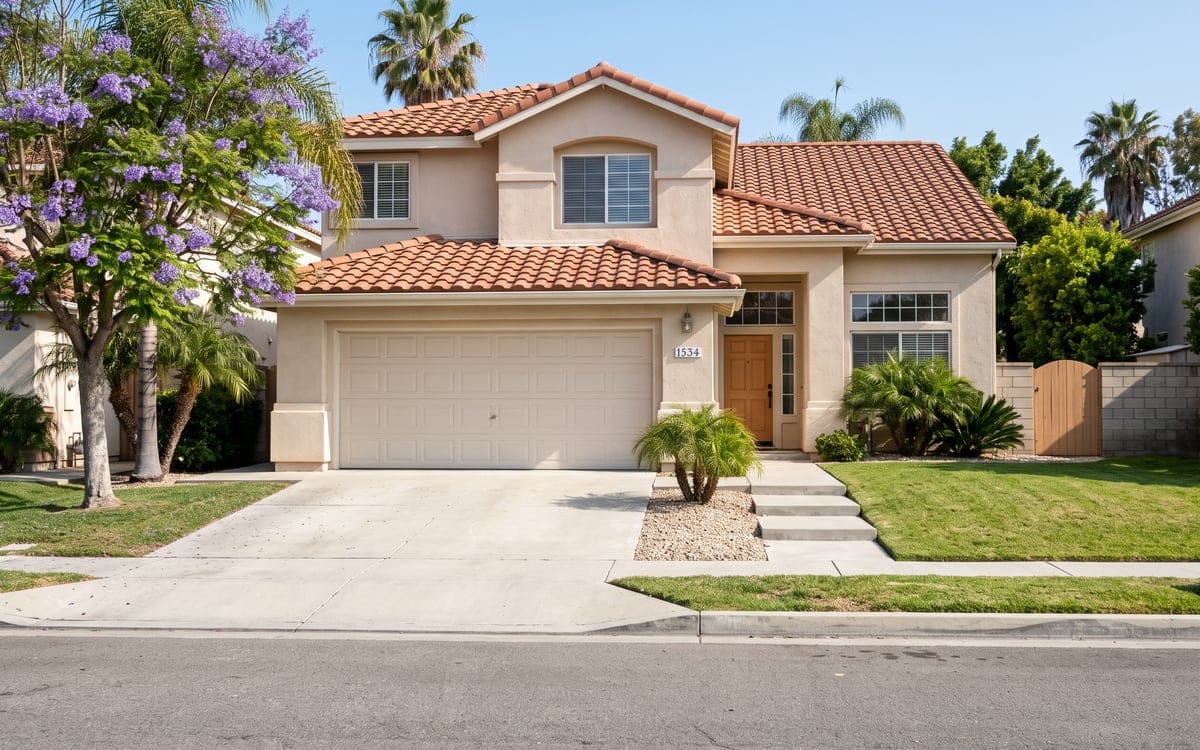
Los Angeles, California pressure washing
Pressure washing in Los Angeles for stucco, roofs and driveways
Pressure washing in Los Angeles usually starts with one surface at a time: stucco gone dull on the side yard, a shingle roof dark from the street, a driveway blotched with oil, a wood fence gone gray. Pressure washing and power washing are the same job in Los Angeles, California, picked by what the surface will take.
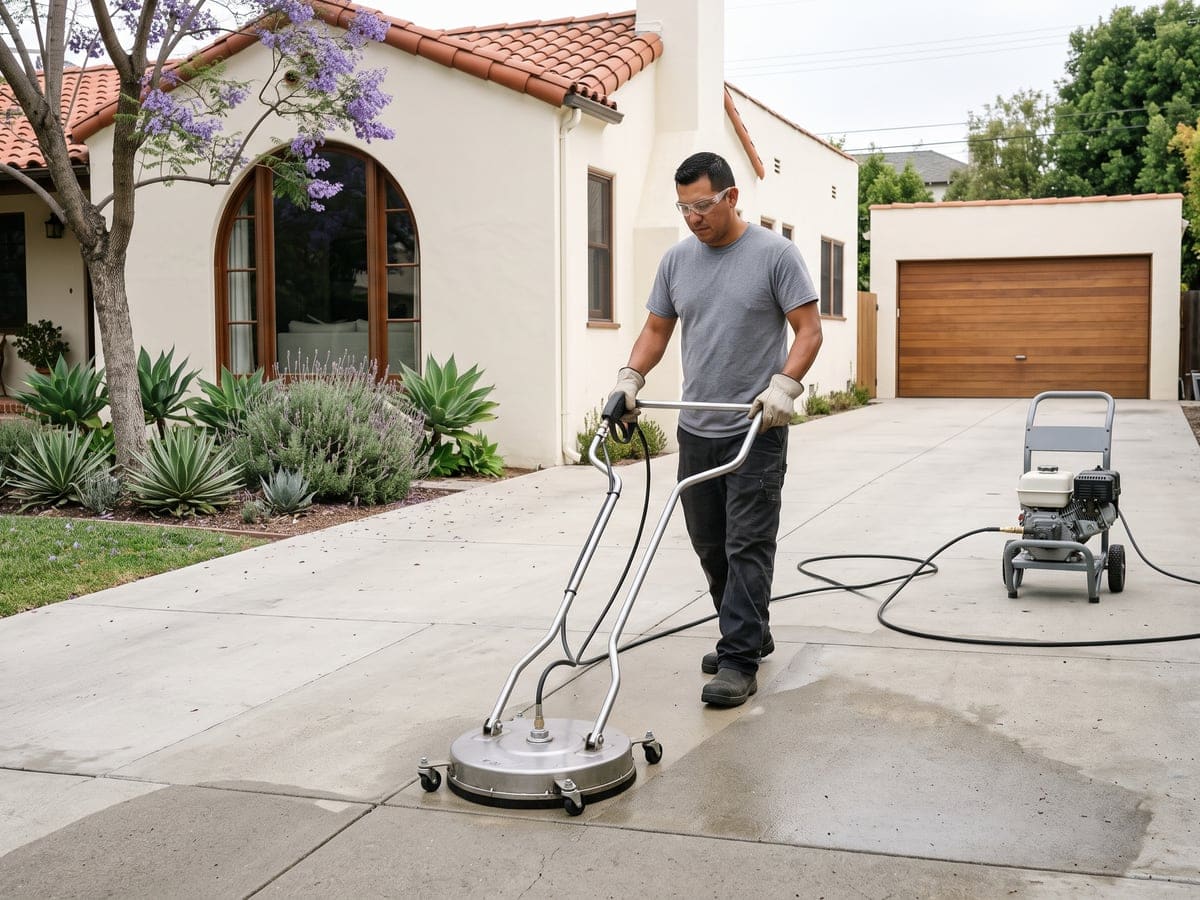
What needs washing right now
Dull stucco on the shaded side
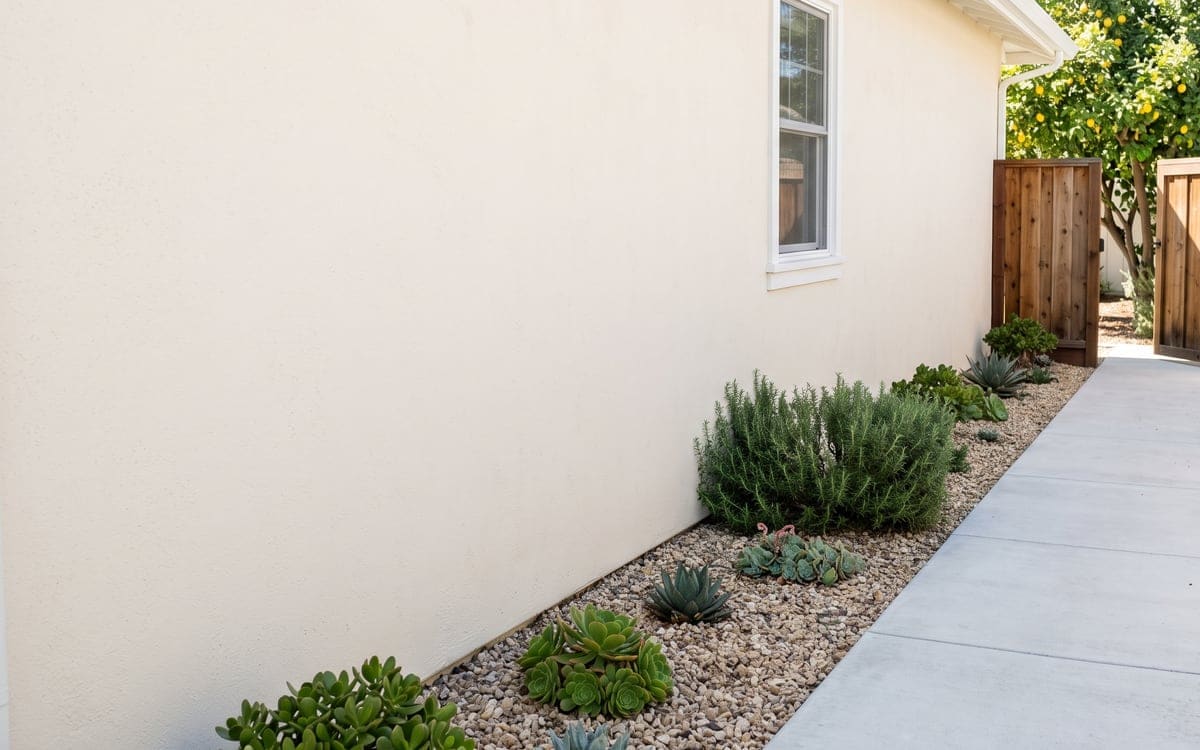
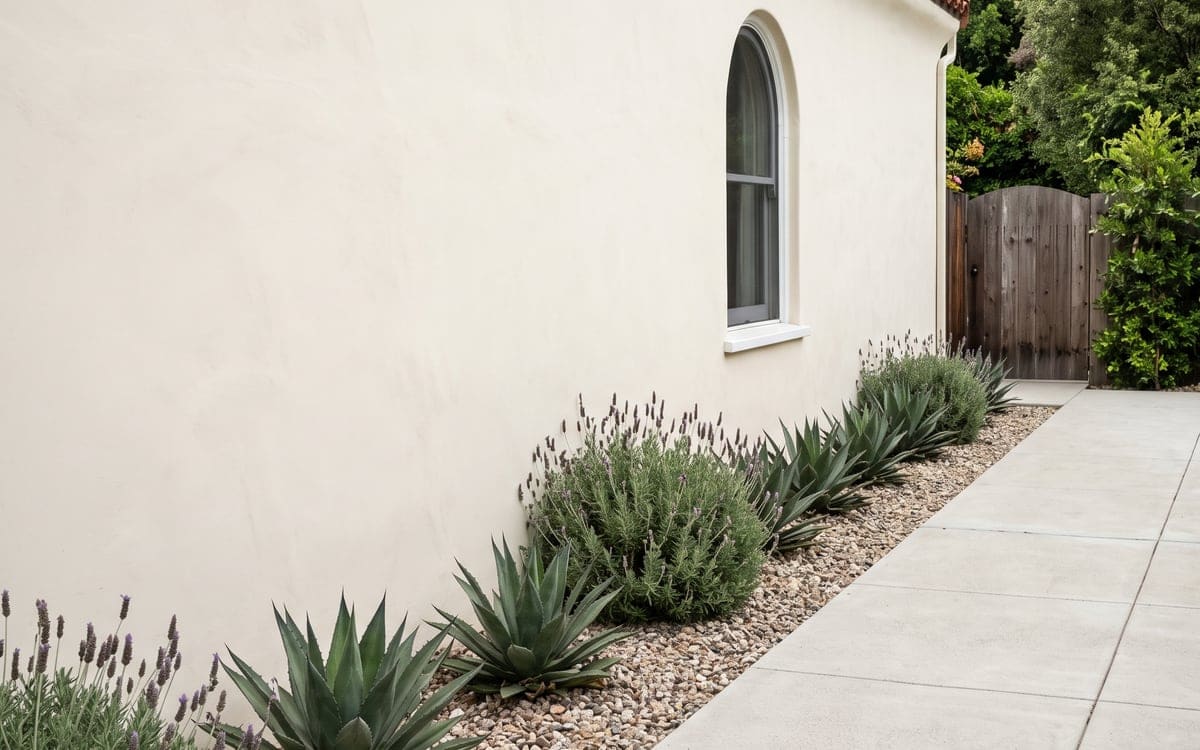
Cream stucco on a side yard reads dull, and the lower band often sits darker than the stretch above it. A full house wash covers stucco, painted siding, trim, soffits and the gutter fronts, wall by wall.
A roof that looks dark from the street
The crew washes shingle and clay tile from the ground at low pressure, with nobody up on the slope. Patches and streaks that read as roof wear from the driveway come off this way. See roof cleaning for the method.
Oil spots and tire marks on the driveway
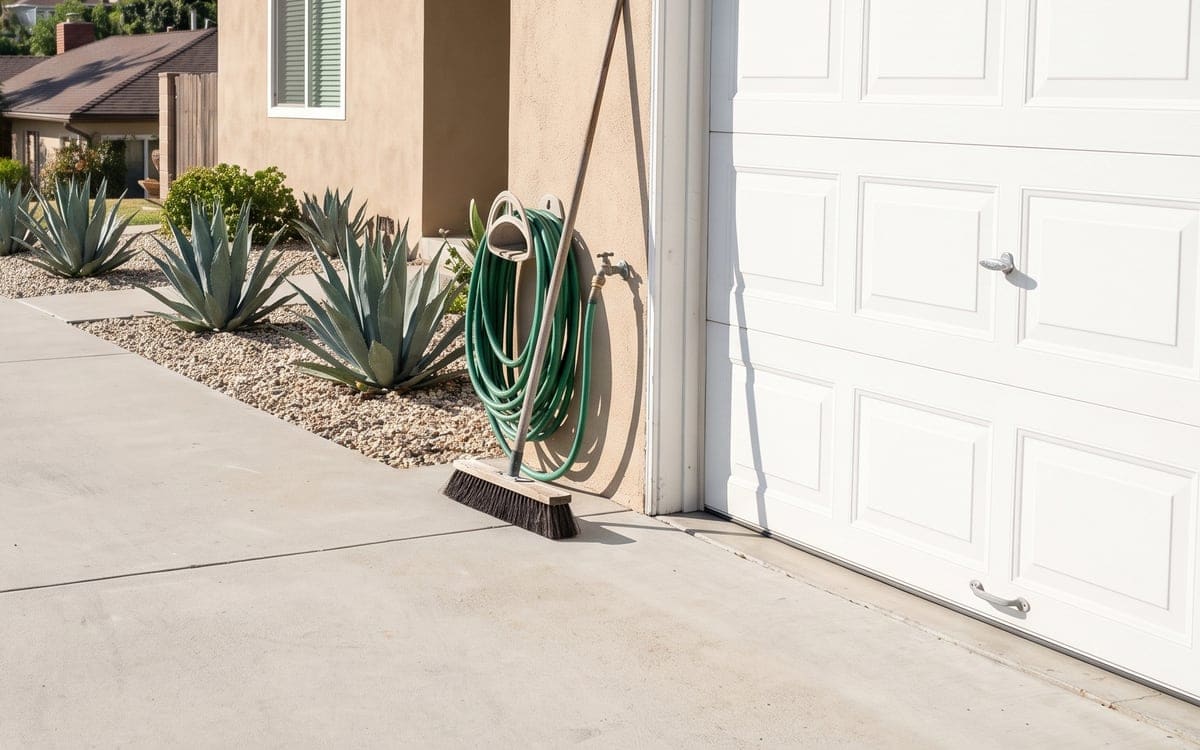
A concrete slab reads gray between the car tracks and darker along the shaded edges. The drive, the walks and the patio go with driveway and patio washing.
Gray boards on a deck or a wood fence
Dry years leave boards gray in the sun and spotted where planters have sat, and a privacy fence can look older than it is. The pressure stays at what the wood will take and no higher. Deck and fence washing walks the surface before anyone turns a valve.
Painted trim, older stucco or a Craftsman's wood siding
Painted trim, older stucco and painted wood siding are not places for a close-range hard spray. The low-pressure method uses a gentle spray and a rinse to lift the dirt instead of pressure.
The outside of a small apartment building
Walkways, courtyards, exterior stairs and parking areas on duplexes, fourplexes and small apartment buildings get washed too. Every surface we wash covers the small-building list as well as the house list. The step treads and the landings get walked and spot-checked before the wand goes to the slab.
Walls and roofs
Driveways, walks and patios
Decks and fences
Long dry summers and houses from the 1960s
Rain in Los Angeles is seasonal. Downtown averages 14.25 inches of rain a year, and 9.41 inches of it falls in December, January and February.1 June, July and August together average 0.11 inch, and August averages none.1
The city's walls and slabs are older than people guess. The median home in the City of Los Angeles was built in 1965,2 and about 44 percent of its housing units were built before 1960.3 For older stucco and painted wood siding, a gentler wash is the method, so pressure stays off anywhere a hard rinse would be too much. Peeling paint and loose stucco belong with a painter or plasterer rather than under a spray, and we point that out before any work starts.
When you call us about the house
- You tell us what needs washing: the surfaces, what they are made of, one story or two, the roof, plants and pets, the gate and the outside spigot, and what has been bothering you most about how the place looks.
- We come look at the house before any work starts, and nothing starts until you say yes.
- The wash covers the surfaces on the agreed list.
What happens when you call goes through the same steps in a little more detail.
Wash water, the street and your account
In Los Angeles, City code defines the storm drain system to include streets and gutters,4 not just the drain inlets at the curb. Water that runs down the driveway into the street has already reached the storm drain in the code's own terms.
City code also bars using a water hose to wash paved surfaces such as sidewalks, walkways, driveways and parking areas, except to alleviate immediate safety or sanitation hazards;5 Department-approved water-conserving spray cleaning devices are exempt, and the code adds that a simple spray nozzle does not qualify. Water used by a contractor acting for an LADWP customer counts as the customer's own use5 under the same code, which is one reason the way a crew handles water matters to the account on the meter.
Los Angeles homes, from detached houses to apartment buildings
About 36 percent of the city's 1,554,332 housing units are detached houses,6 and about 9 percent are duplexes, triplexes and fourplexes.6 Buildings of five or more units account for about 48 percent.6 About 64 percent of city households rent,7 so the outside of a small building is as much a landlord's and manager's concern as an owner's.
Who arranges and pays for a wash is between the landlord and the tenant. We take the call either way, and the other side can be looped in before anything is agreed.
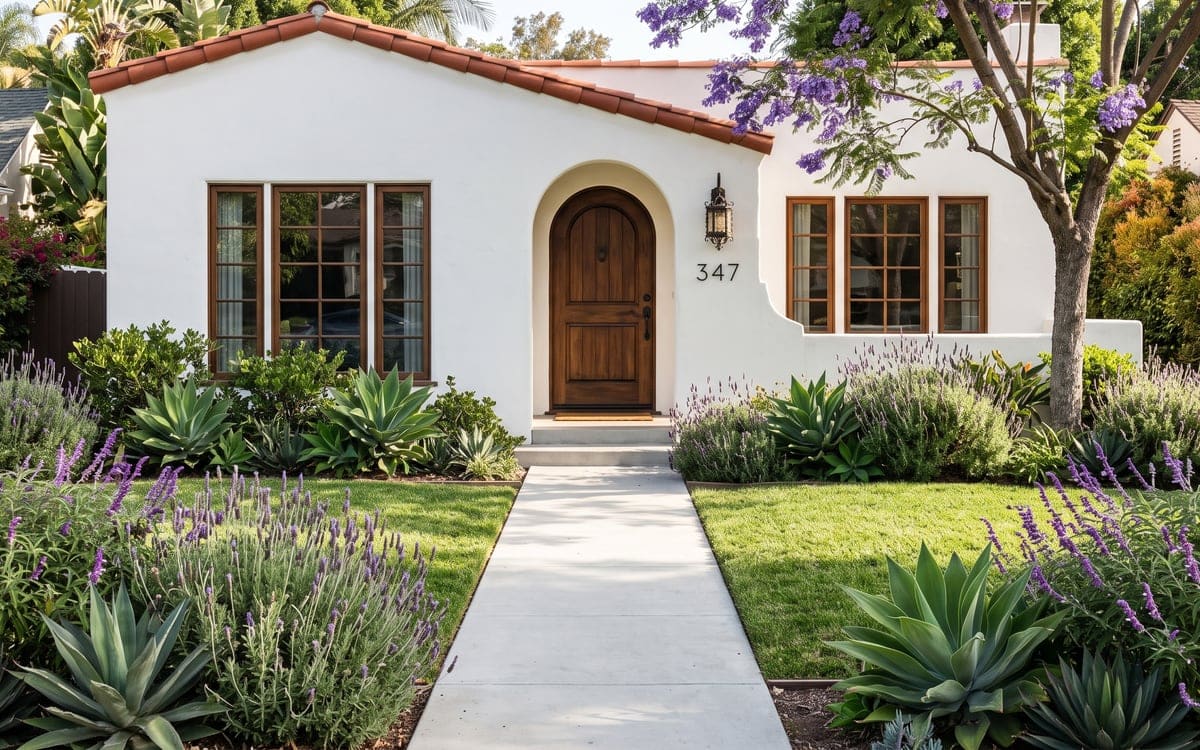
Los Angeles pressure washing guides
Pressure washing in Los Angeles: your questions
How is pressure washing priced here?
The price depends on how much surface the house or building has, what the walls are made of, how much roof shows from the ground, what the drive looks like, and whether walks, patios, pool decks and gutter fronts are on the list. The longer version of what goes into a price runs through each of these.
Pressure washing or soft washing: which does my house need?
Siding, stucco, painted wood and shingle roofs take the low-pressure method. Concrete and pavers take more. Brick depends on the state of its mortar: sound, tight joints can take more pressure, while soft joints get the gentler side. For a wall-by-wall sort, read the soft washing or pressure washing guide.
Can I just hose off my driveway?
City code bars using a water hose to wash paved surfaces such as sidewalks, walkways, driveways and parking areas, except to alleviate immediate safety or sanitation hazards;5 Department-approved water-conserving spray cleaning devices are exempt, and the code adds that a simple spray nozzle does not qualify. The method a crew uses on concrete sits on the driveway page, and the sections of code behind the rule are collected on the water rules guide.
Do I need to be home, and do you need my outside water?
Tell us when you call whether you plan to be home, and tell us where the outside spigot is and whether it works. A weak spigot or a cracked valve is worth flagging early.
What should I move or cover before the wash?
Patio furniture, cushions, grills, cars and anything on the ground near the walls or the drive. Hanging baskets, open window screens and loose weatherstripping are worth a second look. We go over what gets covered before any work starts.
Do you wash roofs and second stories?
Yes. The roof gets washed from the ground, at low pressure, with nobody on the tile or the shingles. Second-story walls are washed as part of a house wash.
Do you wash apartment walkways and courtyards?
Yes. Walkways, courtyards, exterior stairs and parking areas on small apartment buildings sit alongside the house list. About 48 percent of the city's housing units are in buildings of five or more units, and another 9 percent in duplexes, triplexes and fourplexes.6 Tell us when you call how many walkways, how many flights of stairs and how many parking stalls are on the list.
Call (213) 754-1796 with what you have seen and what the house is made of. If the phone is not the right step today, leave your number in the callback form below it.
Sources
- NOAA NCEI U.S. Climate Normals 1991-2020, Los Angeles Downtown USC Campus (USW00093134)
- U.S. Census Bureau, ACS 2020-2024 5-year, table B25035, Los Angeles city (via Census API)
- U.S. Census Bureau, ACS 2020-2024 5-year, table B25034, Los Angeles city (via Census API)
- Los Angeles Municipal Code, Chapter VI, Article 4.4, Sec. 64.70.01 to 64.70.03 (codelibrary.amlegal.com)
- Los Angeles Municipal Code, Chapter XII, Sec. 121.06 to 121.08 (codelibrary.amlegal.com)
- U.S. Census Bureau, ACS 2020-2024 5-year, table B25024, Los Angeles city (via Census API)
- U.S. Census Bureau, ACS 2020-2024 5-year, table B25003, Los Angeles city (via Census API)
Want the walls and the drive clean again?
Describe the stucco, the roof and the paving to someone who washes houses for a living.