How a deck gets washed, board by board
1. A look at the boards, railings and what sits under the deck
The crew walks the deck and points out the parts to think about: soft spots at the ends of boards, popped nails, splinters, gaps that have opened, and railings that give when you lean. A soft board is a repair question; we tell you which pieces we would rather not run water over before a carpenter sees them.
2. Furniture, planters and grills moved off
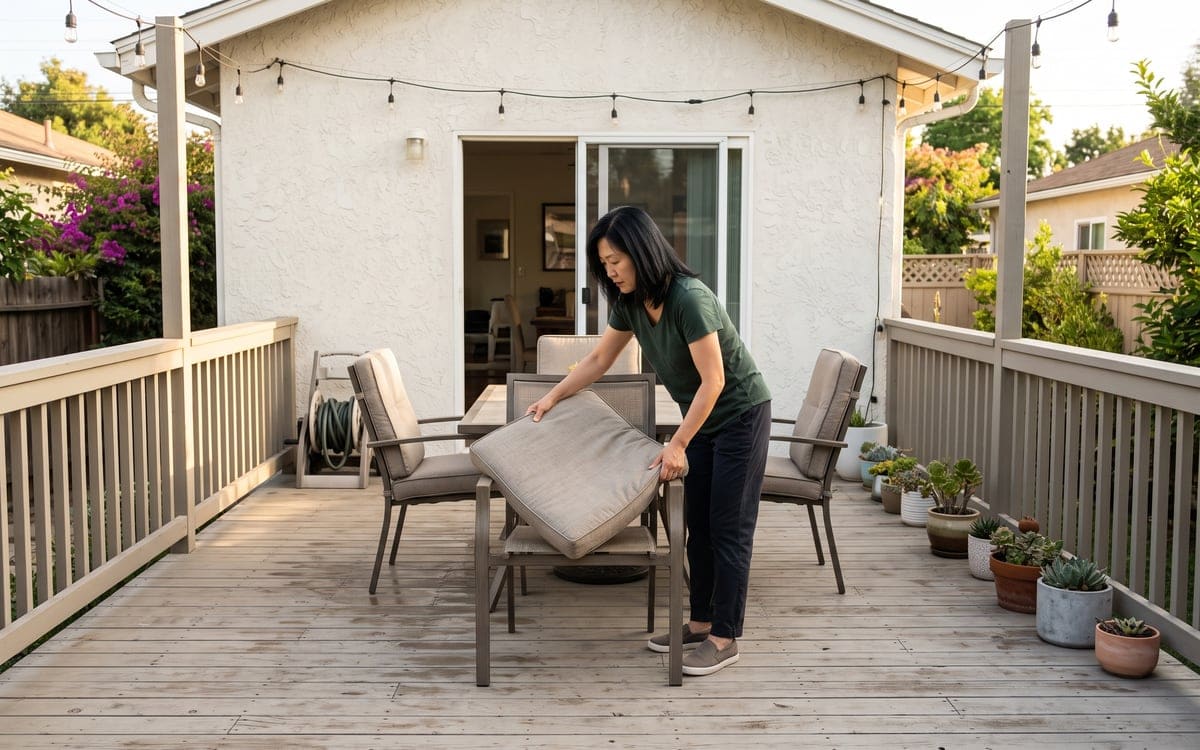
Before anything is sprayed, chairs, cushions, side tables, the grill, pots and anything else sitting on the deck get moved. Pots too heavy to carry get covered and worked around.
3. The boards washed along the grain
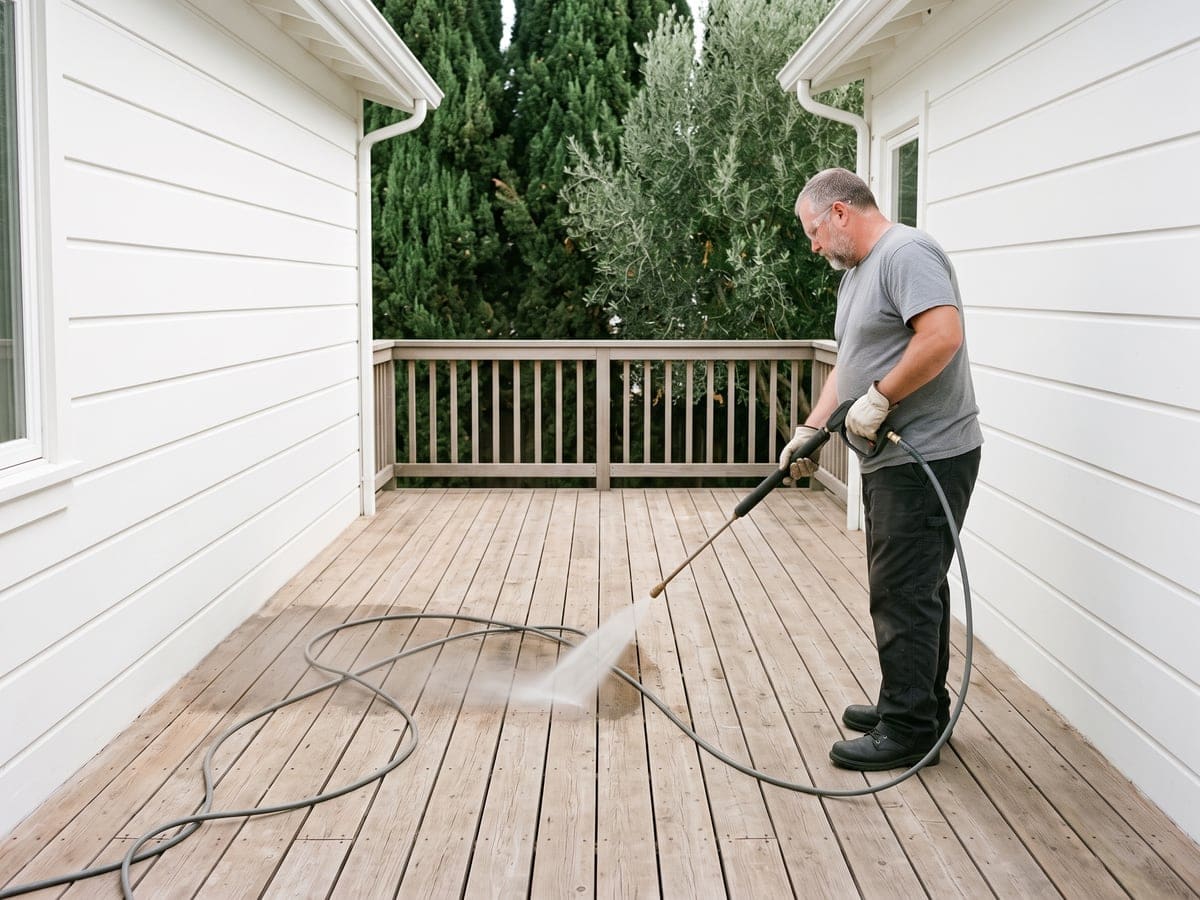
The wash runs the length of the board, with the grain, not across it. The pressure matches the wood: a sun-bleached pine board is softer than a hardwood tread, and the pass eases on the lighter wood. On older boards that have been dry for years, the pass is lighter still. If a board starts to fuzz, the crew backs off.
4. Railings, stairs and lattice
Railings get the top, the balusters, the under-rail and the hand grip. Steps get the tread and the riser, where feet drag silt in from the yard. Lattice around the deck's base gets a gentler pass from the yard side.
5. Fences and block walls
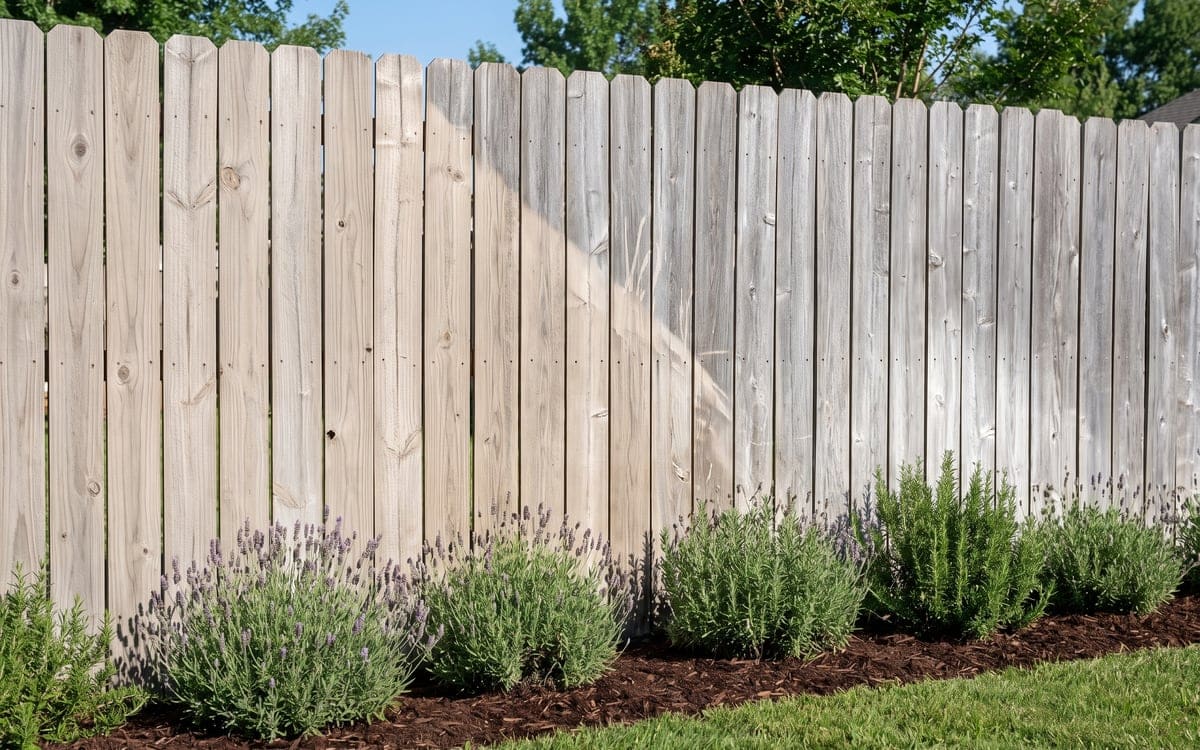
Fences get the pickets, the top rail, the lower rail and the posts, on the side the crew can reach from your yard; the side facing your neighbor's property stays untouched unless they have agreed to it ahead of time. A vinyl fence takes a lighter pass than wood, since harder work can mark the surface. Stucco-capped block walls at the edge of a patio get washed where they bring the eye down.
6. A rinse and the boards after
After the wash, a rinse goes across the boards. Deep gray in wood that has sat untreated for years will not go all the way back.
| Surface | What builds up | How it gets washed |
|---|---|---|
| Pressure-treated pine boards | Pollen, dust, sun silvering on top | A gentle pass along the grain |
| Redwood or cedar boards | Dust, graying with age, some film in the shade | A lighter pass that keeps the grain even |
| Composite boards | Pollen and dust in shaded corners, a dingy film | Low pressure, with care at the ends |
| Railings and stairs | Hand oils on the top rail, foot grit on the treads | A pass that gets each face |
| Wood fence pickets | A gray-green film on the shaded side, dust on top | Panel by panel at a pressure that suits the pickets |
| Vinyl fence panels | Dust, pollen and a dingy film | A lighter pass that would be too soft for wood |
For the house behind the deck, the walls take a different wash from the boards. The patio under the deck, the walks and the pool surround go with the drive and paving page.
Where deck cleaning fits
When a wash is the right step
- A deck that has gone silver or gray and needs the top dust off
- A fence that is dusty on top and has a green film on the shaded side
- A back yard that needs to look right before people come over
When a wash is not the whole answer
Which side a deck sits on is plain once we are at the boards: a sun-bleached deck with sound boards is a wash, and soft, spongy pieces at the ends are a repair question. The rest of what we wash is on the services page.
What the visit covers
A deck wash covers the boards, the rails, the balusters, the steps, the lattice and the fence sides reachable from your yard. We go over which lights and outlets get covered, how the beds get handled and what gray the wash will lift. Staining and sealing are other work; we leave them to the people doing them. On composite and painted boards the method sits closer to a gentler wash than to a slab wash.