How a soft wash works, start to finish
1. A look at each surface
We take a walk around the house and group the walls into two piles: the ones that want low pressure, and the ones that take more. Stucco (smooth or sand-finish), painted wood siding, painted trim and shingle or tile roofs sit on the soft side. Bare concrete, pavers and sound brick take more. Whatever film, dust or dark streak sits on a wall gets described in plain words during the walk; what you see is what the method is picked for.
2. Plants, pets and the gear outside
Beds along the walls, pots and cushions on the deck or patio, and pool equipment all come up at the walk before the water is on. Outlets, exterior lights and the AC unit near a wall are worth naming at the walk.
3. The wash and the rinse from the ground
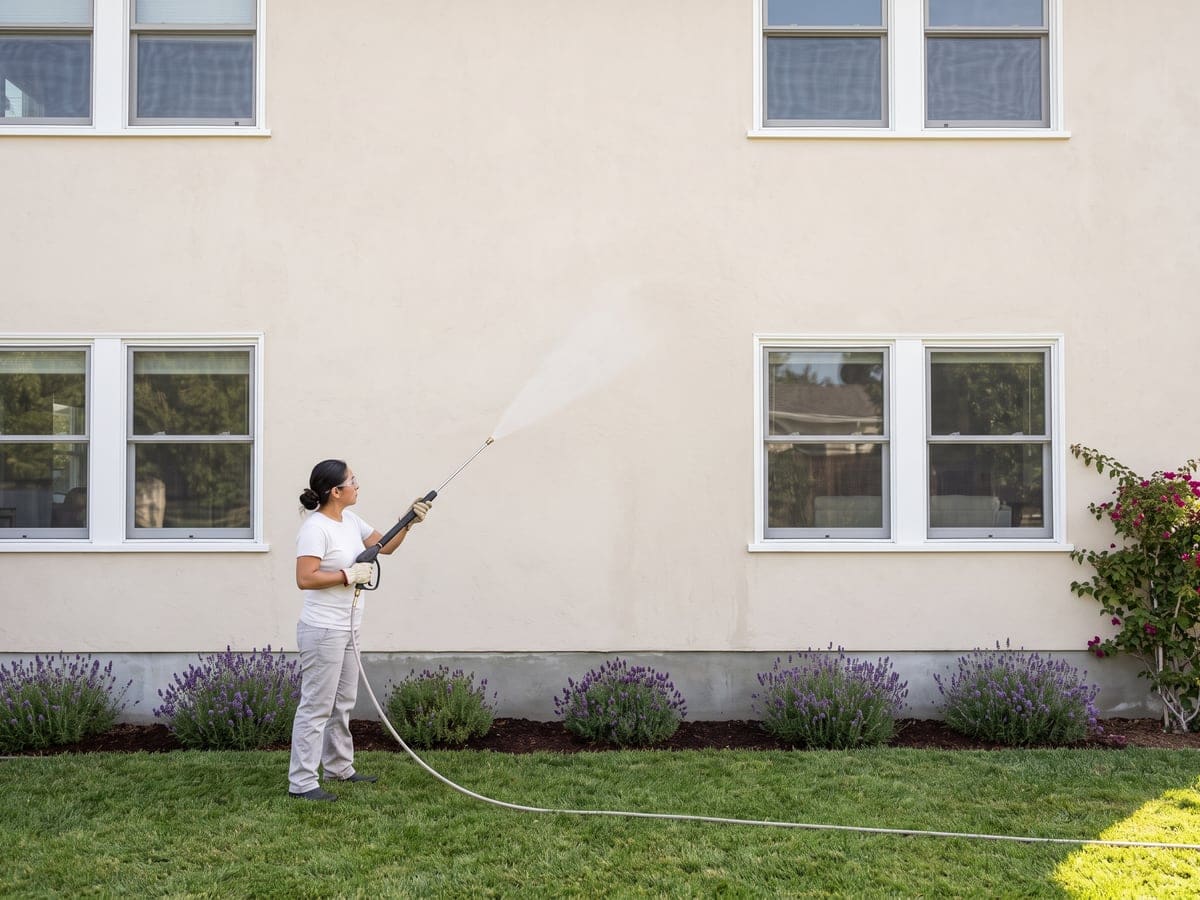
The crew works from the lawn or the walk, with a gentle wide fan of water at low pressure, kept off the paint. The rinse comes down from the top of the wall so nothing is left behind on the stucco or the paint. Over a planted bed, a window seat or a tiled walk, the water gets steered down the surface rather than fanned off it.
| Surface | Soft wash or pressure | Why |
|---|---|---|
| Smooth stucco | Soft wash | Fine pores catch and hold a hard spray |
| Sand-finish stucco | Soft wash | Deeper texture holds more under the surface |
| Painted wood siding | Soft wash | Older paint can lift under more pressure |
| Clay tile roof | Soft wash, from the ground | Nobody on the tile; the spray reaches it from the yard |
| Shingle roof | Soft wash, from the ground | A hard stream can push water under the edges |
| Brick, sound mortar | Pressure wash | Hard, sound joints can take it |
| Concrete driveway | Pressure wash | Flat, hard and much slower to soften |
| Wood deck | Pressure wash, along the grain | Dense boards take more than a wall |
For the driveway and the walks we move to concrete, which takes more pressure. The boards out back belong on wood decks rather than a wall wash. For the whole exterior together, a whole-house wash folds the soft method into the walls and the trim.
Where soft washing fits
When soft washing is the right method
- Stucco, smooth or sand-finish
- Painted wood siding or painted trim
- Shingle or tile roofs looking dark or streaked
- Walls with plants, lights, meters or windows close in
When pressure is a better fit
- Bare concrete walks, driveways and pool decks
- Sound brick, no paint, with tight mortar
- Patio pavers gone gray at the joints
Which side a surface falls on gets confirmed once we are at the house. A wall with sandy mortar or a bank of windows close under it can push the choice to the gentler side even when the material itself would take more.
What the visit covers
A soft wash covers the walls, the trim, the soffits, the fascia and the porch ceilings, with gutter fronts added if you ask. Roofs, washed from the ground are their own visit. The method and what gets covered are laid out before any work starts, so you know what the wash is going to do and what it is not.