How a roof gets washed from the ground
1. A look from the yard
We start in the yard and take the roof in from a few angles: the shaded slopes, the valleys where leaves tend to sit, any green patch low on the north side and the fronts of the gutters below the eaves. The slopes that stay out of the sun get the longest look.
2. Plants, gutters, downspouts and the yard below
Plants against the walls, pets and anything else close to the eaves get talked through before the water is on. Pets go inside. Any ground-level pool equipment gets a cover, and the yard below the eaves gets cleared of anything the crew would rather not walk around.
3. The wash from the ground, at low pressure
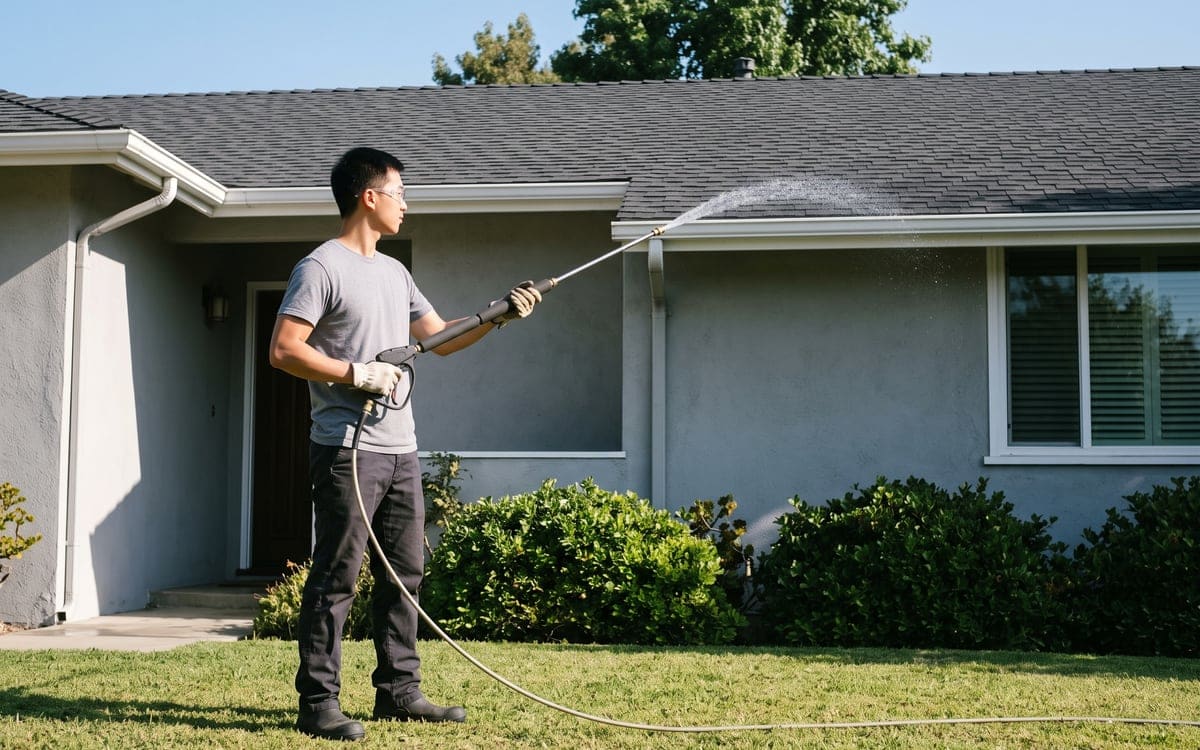
The crew works from the lawn, the walk or the driveway. A gentle, low-pressure stream reaches the roof from there. The crew stays on the ground, and the spray stays off the edges of the tile or shingle rather than being driven into the roofing. On the shaded slopes the pass is slower, since those are the ones carrying the film and the streaks. The water runs down the slope and takes the lifted stain with it.
The crew works the whole wash from the ground, and anyone from the house should stay off the slopes too, since the roof is the wrong surface to walk on wet.
4. A low-pressure rinse
The whole roof gets a rinse from the ridge down. The rinse is kept gentle for the same reason the wash is.
5. Gutter fronts and the walls below
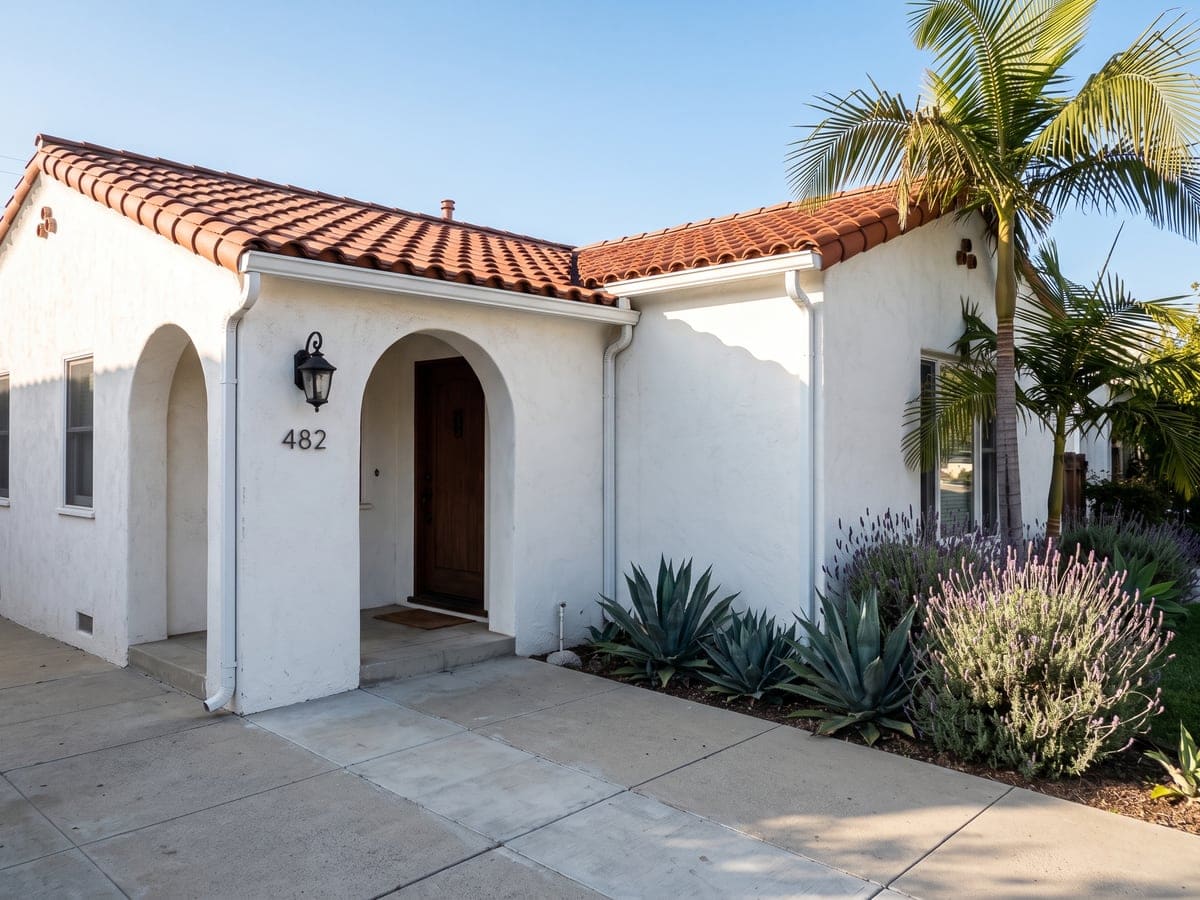
With the roof washed, the fronts of the gutters and the top of the stucco or siding below the eaves get rinsed too. A roof wash often leaves a line down a wall if the wall is not rinsed afterward, so the walls below the drip edge come along on the same pass.
6. The yard once the rinse is done
The ground below the eaves gets checked for anything the rinse left behind.
| What you see on the roof | What it usually is | What washing does |
|---|---|---|
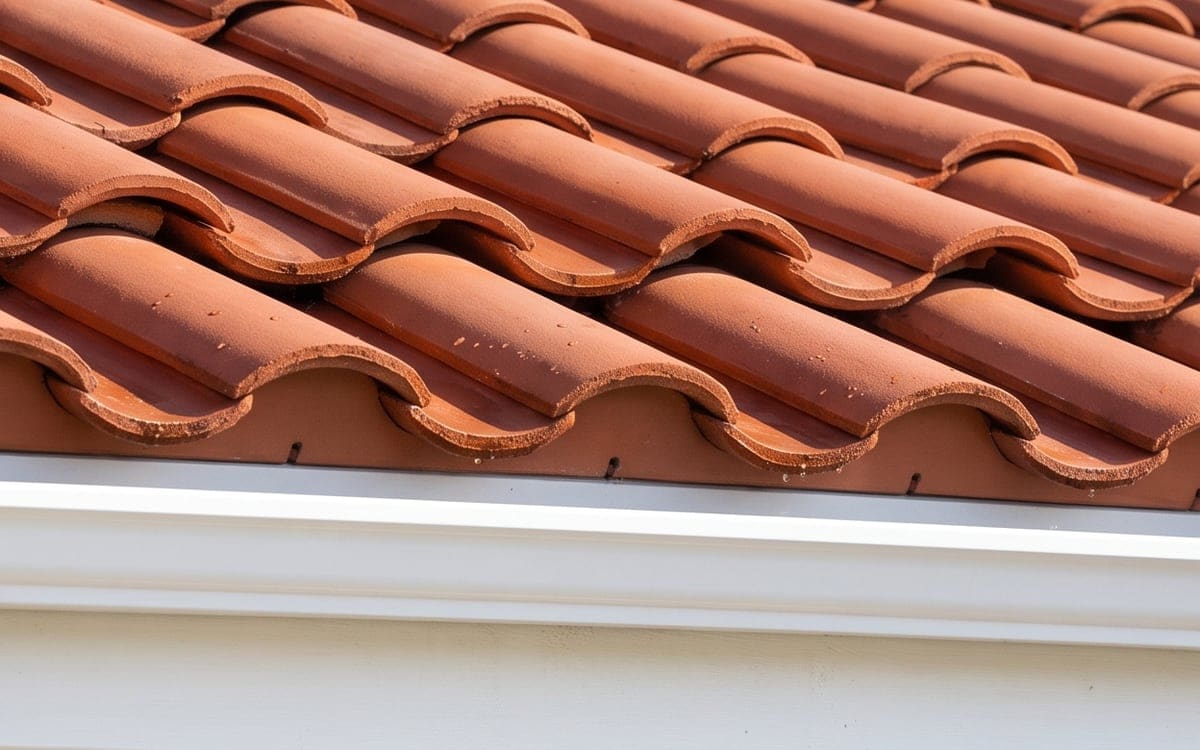
| Darkened clay tile | A film of dust and growth on the surface | Lifted off at low pressure, from the ground |
| Dark streaks on shingles | A dark stain on the shaded side, often from an algae growth | Lifted off at low pressure, from the ground |
| Leaves and debris in the valleys | Debris that holds moisture against the roof | Rinsed from the ground, or flagged for a roofer |
| Dust on the slope | Pollen and grit settled on the roof | Rinsed off from the ground |
| Streaked gutter fronts | A separate stain running down the face | Washed if you ask |
For the walls below the eaves, washing the walls below is a separate step. The whole exterior comes together through the rest of the house. The method side of this is in why roofs get low pressure.
Where roof cleaning fits
When a roof wash is the right job
- A roof that looks dark or streaked from the street
- A line of houses on the block where yours is the darkest
- A side of the roof that stays shaded most of the day
- A visit coming up where the look of the house will matter
Roof cleaning or a roofer
A wash changes how a roof looks. Anything broken, loose or leaking is a roofer's work.
Roof cleaning
- A roof that looks dark, dusty or streaked
- Washed from the ground at low pressure
- Gutter fronts and the walls below rinsed
A roofer
- Cracked, slipped or broken tile
- Missing or curled shingles
- Leaks or any other damage
When a wash is not the whole answer
A wash lifts the dark film and the streaks off the slope; repair is a roofer's trade. Once we are at the house looking up, we can say which side a slope sits on. Sound shingles and intact tile take a wash; lifted or broken pieces are a roofer's call.
What the visit covers
A roof visit covers the slopes we can reach from the ground, with the fronts of the gutters and the tops of the walls below rinsed on the same pass. What we see from the yard, what we will not touch, and the plan for the wash all get laid out before any work starts.