Start with what needs washing and what it is made of
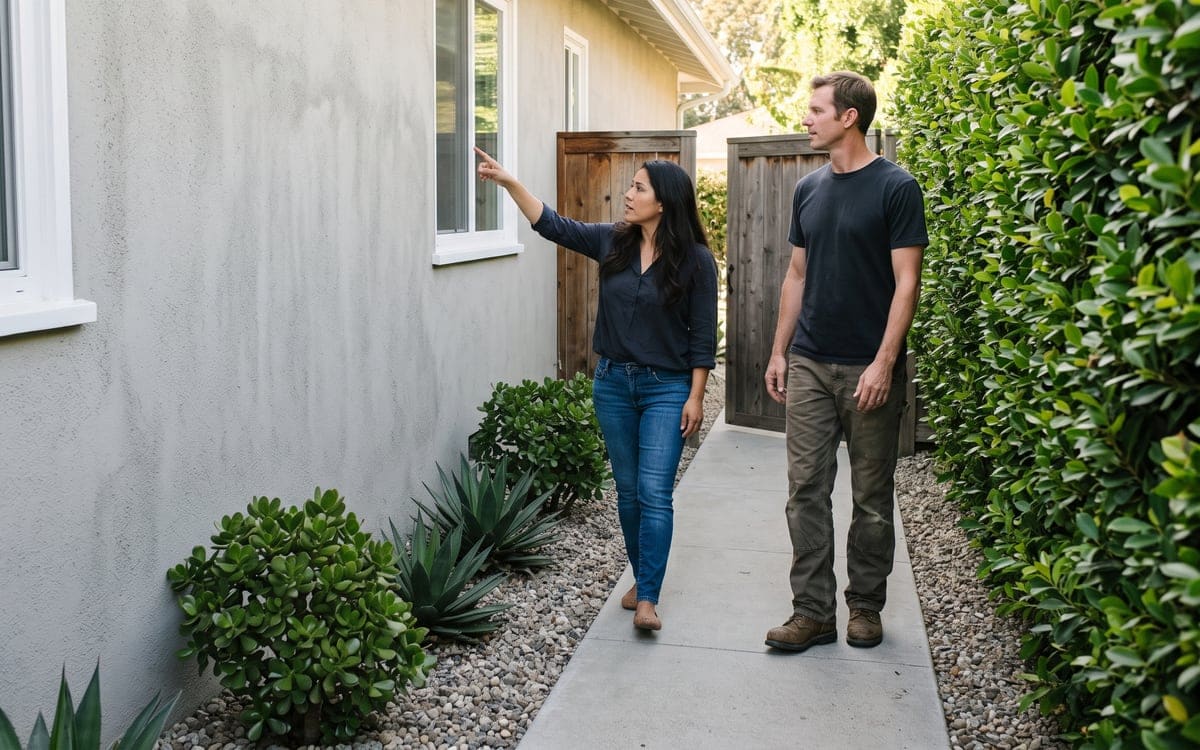
Walk the yard once before you call anyone. Note the walls, the roof if the streaks catch your eye from the street, the drive, the walks and the back patio. Each one wants its own line on the quote. A quote on "the house" without a surface list is a quote that can mean three different jobs, which is why comparing two of them later gets hard.
The material of each surface matters next to the list. Stucco and painted wood are not the same thing on paper, and a sheet that treats them the same is one to question. The crew that walks the walls out loud, surface by surface, is one you can compare to another on paper afterward.
What to settle on the first call
Four things to settle before any work starts, whoever you call.
Show what needs washing
Every surface, the roof and anything to leave alone.
Ask how each surface gets washed
Stucco, wood and concrete take different methods.
Ask about the water
Where it goes and whose spigot it comes from.
Get the price and what it covers
Before anyone starts, not after.
If you are new to the trade words, the services page is a short tour of what each one covers, and a full house wash describes the walls side of the job in more depth.
The method for each surface
How will you wash each surface? The right answer names a method for each one. Stucco and painted wood take the low-pressure method. Soft washing on the walls is the method for stucco, painted wood and shingle or tile roofs. Driveway and walk concrete take more pressure. Brick is washed with care at the mortar joints. The deck is a soft to moderate wash.
If the answer is a flat "we pressure wash everything the same way," that is a second question in the making. One pressure for every surface either underwashes the drive or overwashes the walls, and both results read clearly from the yard afterward. Soft or pressure, surface by surface covers the method side in depth.
The roof and the second story, from the ground
If the roof is on your list, there is one answer you want on the method: from the ground. A crew that plans to walk the tile or the shingles is doing it the harder way, and the surface was never meant to be climbed on for a wash. Roof cleaning from the ground is a low-pressure pass, with the crew staying off the roof.
Second-story walls get the same treatment. The gable end over the garage, the dormer and the trim up high all get washed from the ground. Ask any company how they plan to reach the second story from the ground, so the ladder stays off the gutter.
Ask about the water
Ask any crew how they plan to handle the water on your drive. The right answer is specific to your slope and your gutter.
Under City code, water used by an employee, agent or contractor acting for an LADWP customer counts as the customer's own use.1 Water a hired crew runs on your house is on your LADWP account.
The code also puts the storm drain where most people do not expect it. The storm drain system includes streets and gutters,2 so the gutter in front of the house is already the drain. And for industrial or commercial activities, no person shall discharge, cause or permit the discharge of untreated runoff from the washing of impervious surfaces into the storm drain system.2
A company's answer should name the drive, the slope and the gutter. The whole picture of the City's water rules covers it in more depth.
Ask what the company will not do
Washing has a line past which the job turns into other work, and a good crew knows where the line is. A wash cleans the outside; repair, replacement, sealing, staining and painting are not part of what a washer does. A crew that says no plainly when the question turns to other trades is one that has thought about where the wash ends.
If the walls have peeling paint or the stucco is cracked and loose, those surfaces go to a painter or plasterer, and a wash leaves them alone. A careful company tells you that at the walk-around and lays out a plan that works around the damaged area.
Ask what the price covers before work starts
A price is more useful when it covers a list. Ask that the quote spell out every surface by name, with the method next to it, and that it include the plan for the water. A written sheet with a surface list is easier to compare to a second one, and easier to hold up against the work on the day. What goes into a price covers how a quote gets built. Agree on the price and what it covers before any water runs on your house.
| Question to ask | Why it matters |
|---|---|
| How will you wash each surface? | Stucco, wood, brick, tile and concrete each want their own method |
| Can you work from the ground on the roof and the gable ends? | Roofs and second stories are washed from the ground |
| Where does the wash water go on this drive? | Not the street, the gutter or a drain |
| Whose outside spigot does the crew use? | Water a crew uses counts on the customer's account |
| What is on the quote, surface by surface? | A listed quote is comparable; a lump sum is not |
| What will you not do on this job? | A clear no is as useful as a yes |
If the sheet does not have most of those answers in writing, ask for them before the day of the wash. Settle the terms in writing before the work starts.
Promises worth asking twice about
Living things like algae and mildew grow on walls under certain conditions, and a wash cleans what is on the wall today, so a claim that a wash makes a stain or a surface "never come back" is a line to ask about. Any long-haul claim about how many years the look will hold sits in the same bin, since how long a wall stays clean depends on your house, your yard and the sun on each side.
Owners, landlords and managers hire differently
Most of the city rents the place where it lives. Of the city's 1,439,097 occupied homes, renters occupy 920,674 (about 64 percent) and owners 518,423 (about 36 percent).3 That changes who hires a wash and what the sheet covers.
An owner on a single-family house walks the yard and lists the surfaces. A landlord or a property manager hires a wash on a small apartment building, and the sheet shifts to walkways, exterior stairs, courtyards, the stucco of the building itself and the parking area. A renter wondering about the courtyard of a shared building usually ends up at the manager, who sets the plan. Whose job it is to arrange and pay for a wash is between the landlord and the tenant and the lease; the wash itself is the same wash.
If you are a manager, say so on the first call, with the number of units, how tall the building is and whether the courtyard and stairs are on the list. The company's own notes on what a visit looks like describe the walk-around that works for both a house and a small building.