How a house gets washed, wall by wall
1. A walk around the house first
Before any water flows we walk the whole perimeter. Stucco gets a look for cracks and old patches that read a different color. Painted trim gets checked for corners starting to lift. Outlets, exterior lights, the meter, the main panel, the AC condenser and any solar panels at the roof edge get noted, along with the beds below the walls. What gets covered on the walls is talked through before any work starts.
2. Loose dust and cobweb come off the walls
A soft pre-rinse lifts pollen, dust and cobweb off the stucco and the undersides of the eaves before anything stronger goes on. The pre-rinse also lets the crew see where water drains off a wall and whether any window seal looks worn.
3. Each wall gets the method that suits it
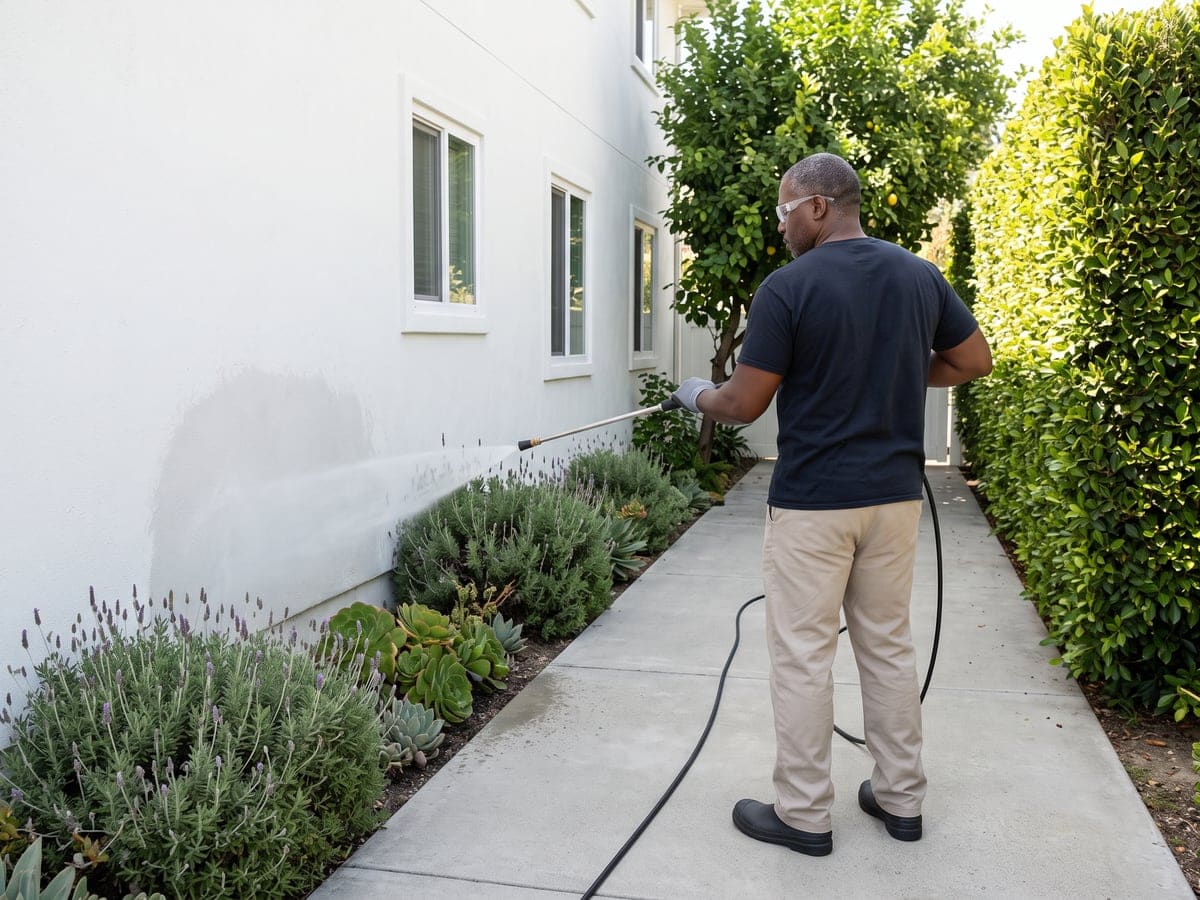
Smooth stucco, sand-finish stucco, painted wood and older trim all want the low-pressure soft wash rather than a hard spray. The sand-finish holds more under its surface and asks for a longer, lighter pass. Brick is read by its mortar: sound, tight joints can take more pressure, while soft joints get the gentler side.
4. Eaves, soffits and the rafter tails
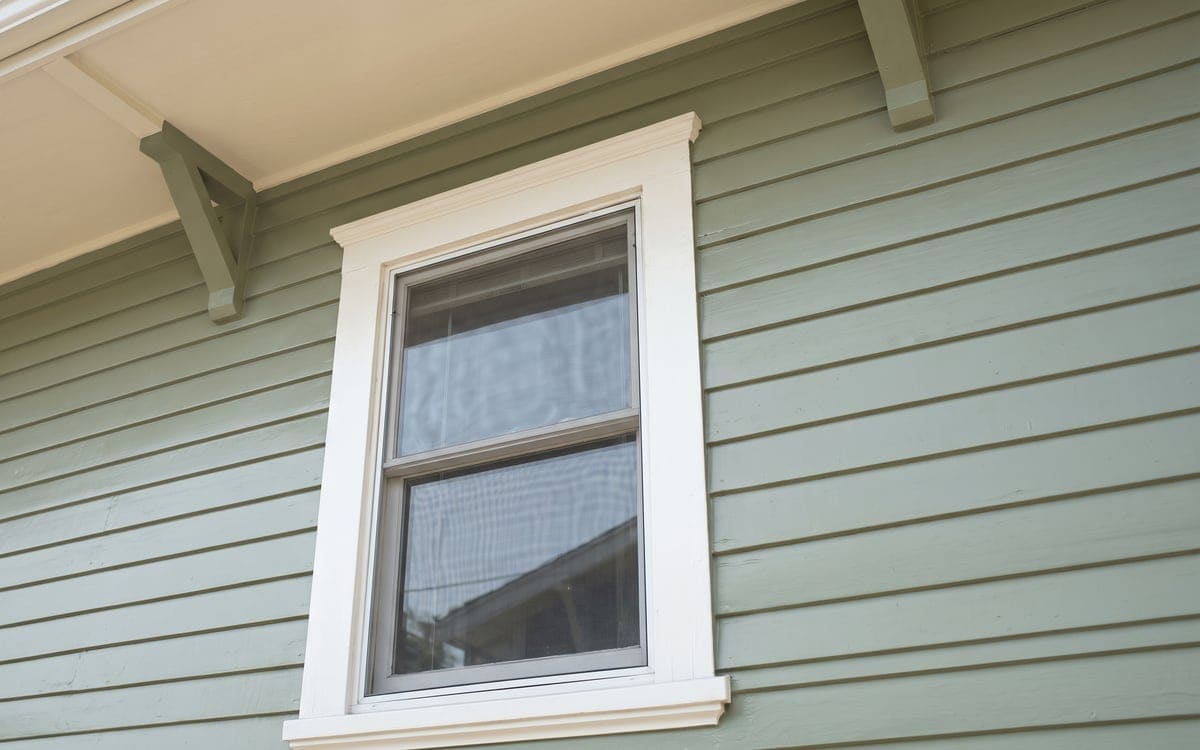
Trim, fascia, soffits and the porch ceiling each get their own pass. On a Craftsman these are the wide eaves and rafter tails above the porch; on a Spanish style house they are the painted beam ends and the stucco under an arched entry. The eaves get a lower pressure than a wall.
5. Gutter fronts, if you want them whitened
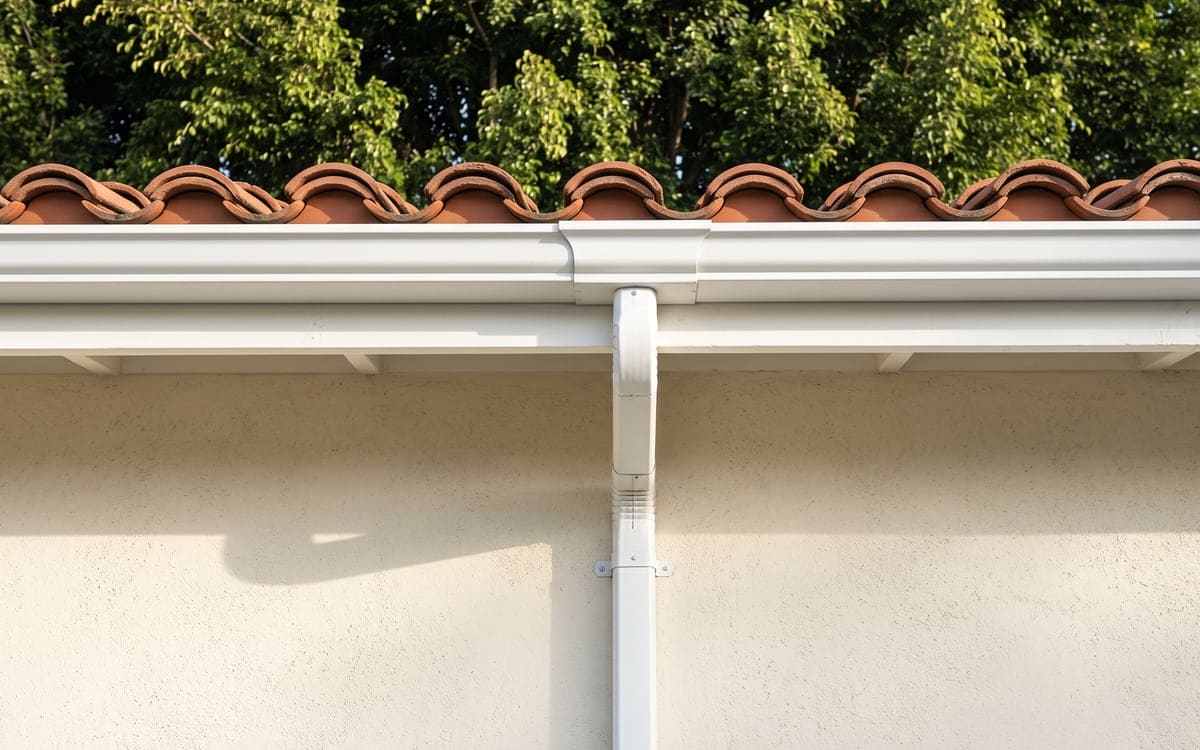
The outside face of a gutter runs its own dark streak that a top-to-bottom rinse rarely clears. Gutter whitening is a stronger pass on that face. The inside of the gutter, where leaves and grit sit, is a different trade.
6. A rinse from top to bottom and a last walk
Once every wall has been washed, the whole house gets a rinse from the eaves down so nothing is left sitting on the stucco or the paint.
| Surface | What builds up | How it gets washed |
|---|---|---|
| Smooth stucco | Pollen, dust, a gray-green film in the shade | Low pressure, held at a steady distance |
| Sand-finish stucco | The same, plus grit lodged in the texture | Low pressure, slower passes |
| Painted wood siding | Pollen and dust, a chalky bloom on old paint | Light touch; sound paint only |
| Brick, sound mortar | Grime and dark streaks | More pressure, held off the joints |
| Trim, eaves and soffits | Dingy film, darkened rafter tails | Same method as the wall below |
| Gutter fronts | Dark streaks down the face | A separate whitening step |
| Block garden walls | Dust at the base, cobweb in the caps | Low pressure, bottom-to-top rinse |
A house wash takes the walls and the parts under the eaves. For streaks or a dark film on the roof above we move to the roof above it, and the concrete at the front steps goes with the driveway and walks.
Where a house wash fits
When a full house wash is the job
- Walls read dull or dusty from the street
- A gray-green film has settled low on the shaded side
- A listing photo, an open house or family coming up for a visit
- You cannot remember the last time the house was washed
When another service is a better call
- Dark streaks or a film on the roof point to a roof wash done from the ground
- Gray, stained or oil-marked concrete goes with the driveway page
- Boards and railings on the deck out back are their own job
- Peeling, chalky paint and loose or cracked stucco go to a painter or plasterer first; washing before the repair only speeds the lifting
Once we are at the house we can tell which column the wall belongs in.
What the visit covers
A house wash covers the walls, the trim, the soffits, the fascia and the porch ceilings. If you ask for them, the gutter fronts come along as a whitening step. The surfaces, the method and what the crew will work around get laid out before any work starts, so you know what will be covered and what is going to look different at the end.