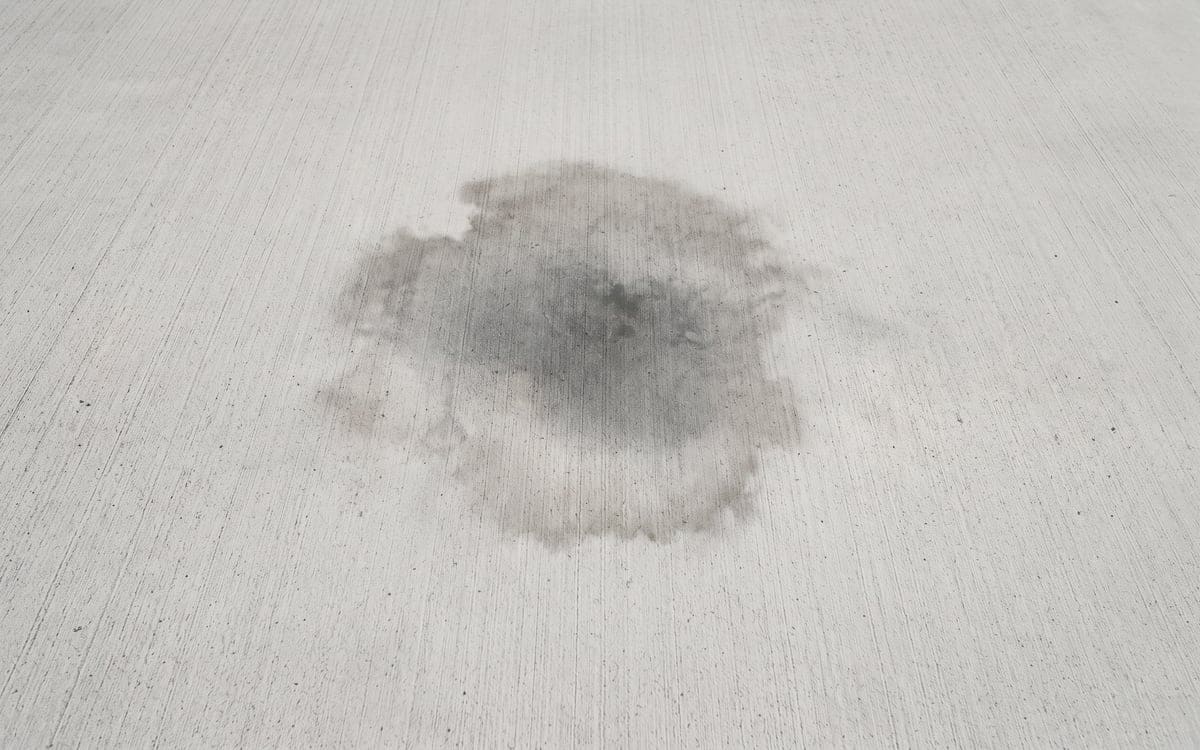
Age of the stain, from drip to shadow
A fresh oil drip still sits on top of the concrete. The oil has not had time to soak into the slab. A careful wash can lift most of what you see, and the drive goes back closer to its own color than people expect. An old stain behaves differently. The oil has soaked into the surface and spread wider than the first drip. It has set, dried and been walked over. A wash on an old stain lightens it, often a lot, but it does not always vanish.
A fresh drip and an old stain
A fresh drip usually lightens the most; an old stain often leaves a shadow.
A fresh drip
- Still dark and glossy on top
- Has not soaked deep yet
- Usually lightens the most
An old stain
- Dull and set into the surface
- Spread wider than the first drip
- Often lightens without vanishing
The age of the stain is what we ask about first. When it happened, where the drip was coming from, and whether a car still parks on the same spot are all pieces of the picture. If you can send us the shape of the shadow in a few words when you call, the plan on the slab fits better.
Plain concrete, pavers and stamped concrete each take their own care
Plain poured concrete is the slab most people picture. The pass runs in even strokes along the slab, with the wand moving instead of sitting over one spot. The passes keep the surface even so a washed patch does not stand out.
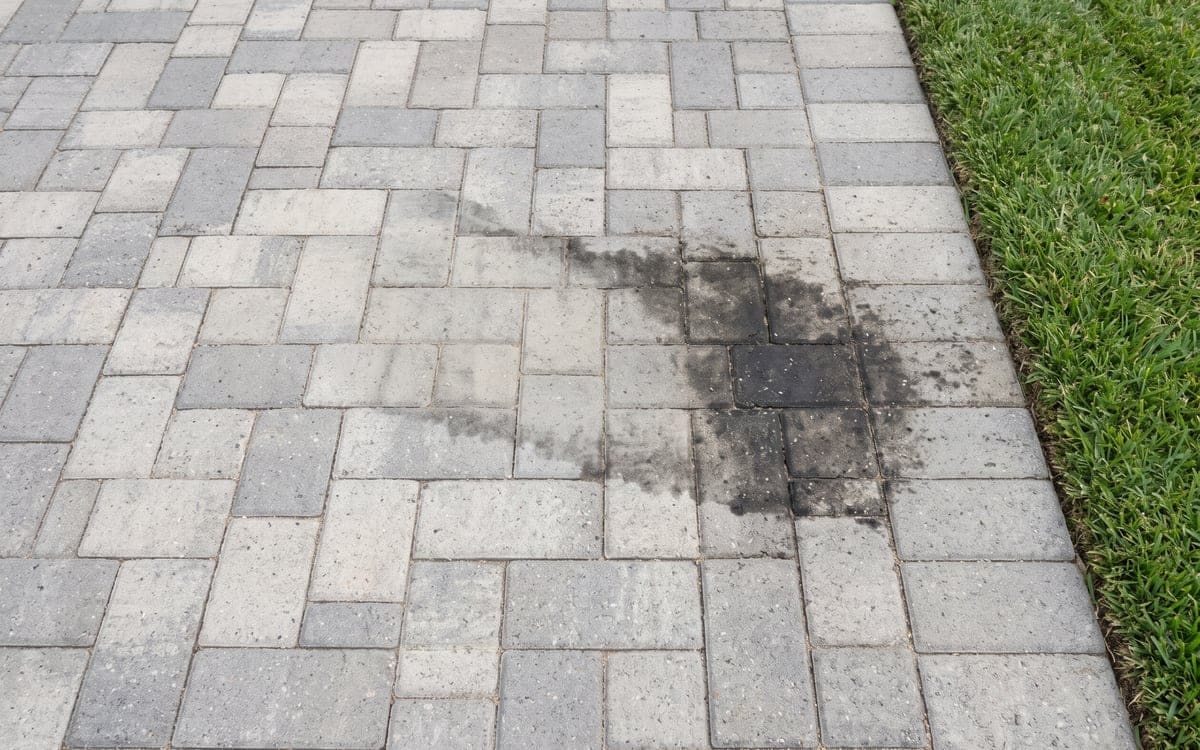
Concrete pavers are a different setup. The pavers themselves can take the pressure, but the sand or mortar in the joints between them needs a careful pass. Working across the pavers and keeping the wand off the joints is the plan. A set of pavers that lost sand on the last wash reads clearly from a few feet away, so the method on pavers runs careful.
Stamped concrete is poured concrete with a pattern pressed in, and that pattern is what makes the stamp worth looking at. The groove between the stamps is narrow and shallow, and a tight stream held in a groove can mark it. On stamped concrete the pass stays on the stamp with the wand moving the whole time, and the groove gets a short, quick pass of its own.
Why a hose and soap toward the curb is out in Los Angeles
The usual home remedy for an oil stain is dish soap and a hose, with the suds running down the drive and into the gutter. In Los Angeles that is the wrong plan.
LA County Public Works says stormwater and urban runoff pick up pollutants such as sediment, airborne chemicals, pet waste, trash, oil and other auto fluids and carry them into storm drains that flow to local rivers, creeks and the ocean untreated.1
City code adds that the storm drain system includes streets, gutters, conduits, natural or artificial drains, channels and watercourses.2 The gutter in front of your house is already the drain. And the code bars businesses from letting untreated runoff from washing hard surfaces reach the storm drain system.2 The whole picture on where wash water goes covers it in more depth.
A stain on the drive, by what you see
A quick picture of what a wash does on the four common things on a Los Angeles driveway.
| Stain | What you see | What washing usually does |
|---|---|---|
| Fresh oil drip | Dark, glossy, still wet on top | Often lifts most of it; the slab reads a lot cleaner |
| Old oil shadow | Dull, spread wider than the first drop | Lightens, often a lot; a shadow can stay |
| Rust from a post or tool | Reddish lines or dots | Rust takes a different plan, set at the slab |
| Tire marks | Dark bands or smears | Pass with the slab; a wide pivot sometimes leaves a hint |
What a wash usually lifts and what it only lightens
A fresh drip the car dropped yesterday morning tends to come up a long way. Some fresh drips look nearly gone after the pass, with a faint shadow where the oil was. An old stain in a parking spot a car has used for a year is a different outcome. The method lifts a lot, but there is often still a shadow once the slab dries. The surface of the concrete has been changed by the stain, and no wash puts the surface back to new.
The plain talk at the drive is about how far a wash can carry a stain, since replacing the slab is other work.
The slab and the state of the stain shift the plan
Two drives with the same oil shadow do not always come out the same. The crew looks at the slab, the age of the paving and the state of the stains. On the first pass the wand runs light so we can see how much of the stain the slab gives up. If the stain is lifting cleanly, the plan carries on; if the slab is holding on to the shadow, the method changes before anyone promises a result.
Rust and tire marks are not oil
Rust lines running down a drive from a fence post or a garden tool are a different stain from oil. They take a different plan, set at the slab, and lumping them with the oil work tends to leave both half-done. Our rust guide will go into the method once it is up. Tire marks are their own stain again. They are rubber dragged across concrete under heat, and a wash can lift most of them. A wide tire pivot sometimes leaves a mark that is partly stain and partly scuff, with a shadow that stays once the slab dries. The guide on tire marks is also on the plan.
A drive carrying oil, rust and tire marks is worked through in order, with the slab ending on an even pass.
What to tell us about the stain
The call that leads to a good wash plan has a short set of answers.
- Where is the stain on the drive, roughly, in words anyone could follow.
- When it happened, as near as you can tell.
- What was dripping, if you know (engine oil, transmission fluid, something else).
- Whether a car still parks on the same spot.
- Whether the drive is plain concrete, pavers or stamped.
- Whether the slab was ever sealed.
With that in mind, we can picture the pass before we drive out. Walk the drive once, write down what the stains look like, and bring the list to the first call. A full driveway wash handles the whole slab, and if more than oil is on the drive, we fold the other work into the same plan. The other surfaces we wash can go on the same quote, and the house above the drive can be on the sheet too.
What goes into a price covers how a stain shifts the number, and the plan for the water on the slab sits inside the City's rules on hoses, gutters and drains.