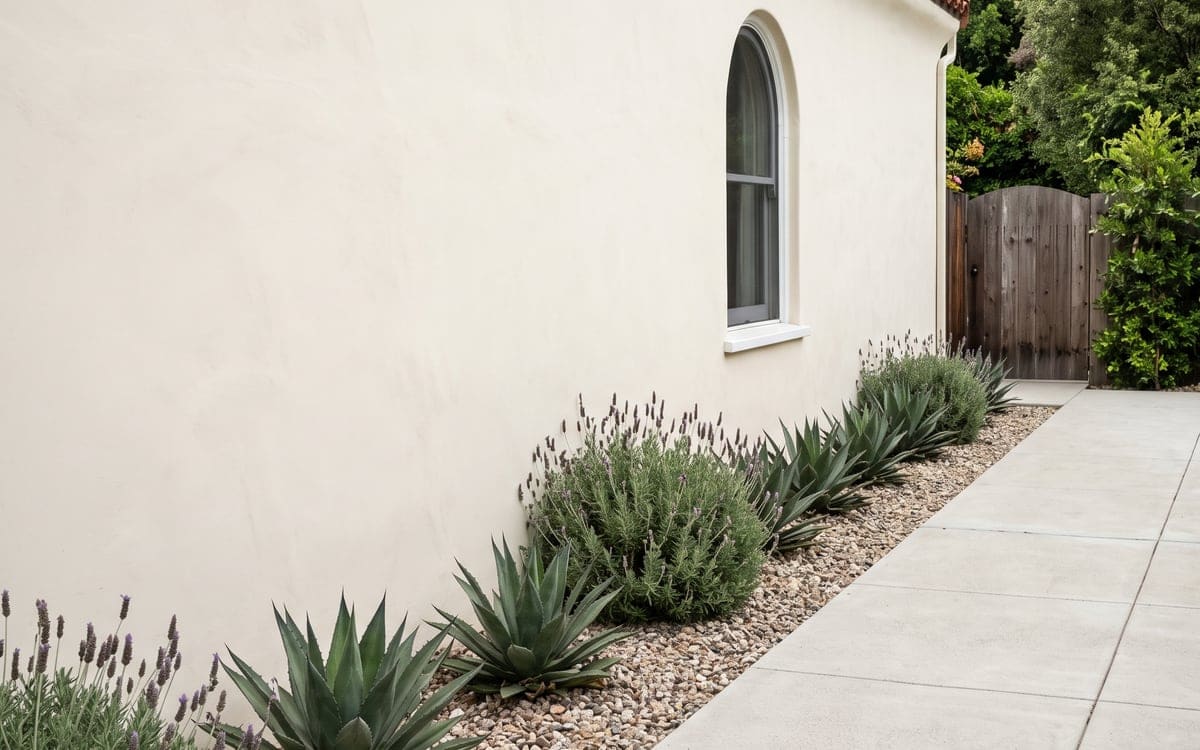
Stucco, painted wood and roofs get the low-pressure wash
Smooth stucco, sand-finish stucco, painted wood siding and painted trim all group with the soft side. None of them is meant to be hit with a tight stream at close range. Stucco looks tough, but its surface is full of tiny pockets, and a hard spray chews at the finish. Painted wood lifts and softens the same way. A low-pressure soft wash is the method that cleans these walls without working against them.
Roofs sit in the same low-pressure group, and they are their own job besides. A roof cleaning is washed from the ground at low pressure, with no one on the tile or the shingles. Shingle and clay tile roofs both get the gentle wash; the choice is not between methods but between a wash and a roofer, and anything cracked, slipped or leaking goes to a roofer.
Concrete, pavers and block walls can take more
Driveways and walks group with the pressure side. Concrete is hard and dense, and the stains sit in the surface rather than on top of it. Tire marks, oil shadows, leaf stains and the dark haze near a garage all want more pressure to come up. Driveway pressure washing runs more pressure than the walls, and the drive is washed in even passes.
Concrete pavers out back are a close cousin. They can take more pressure than stucco, with care at the joints so sand stays put. Block garden walls land in the same group, and the mortar between the courses is what the crew watches on the pass. Older brick with soft mortar backs off toward the middle of the dial, with the wand moving instead of parked over one joint. Weep holes in a brick skirt around the base of a house get a careful rinse, not a tight stream.
Which surfaces get which wash
A general guide. The crew still looks at the age and condition of each surface at the walk.
Low pressure
- Smooth and sand-finish stucco
- Painted wood siding and trim
- Tile and shingle roofs, from the ground
In between
- Wood decks, along the grain
- Composite boards
- Older brick with soft mortar
More pressure
- Bare concrete drives and walks
- Concrete pavers
- Block garden walls
Wood decks sit in between
A wood deck is softer than concrete and tougher than painted trim. The method lands in the middle, along the grain of the boards, with care at the butts and edges. A wash of the deck itself is a soft to moderate wash that reaches to clean, not to strip. Composite boards look modern and are tough, but they scratch and show marks under too much pressure held in one place. The right pressure for a deck changes with the age and the species of the boards, so the call is made at the deck itself and not from a quote sheet.
A deck that has gone silver with time or carries a stain on its surface can still be washed, but there is a line past which the boards are not helped by more pressure. If a board is cupped or splintered, the wand pulls fibers up instead of taking dirt off.
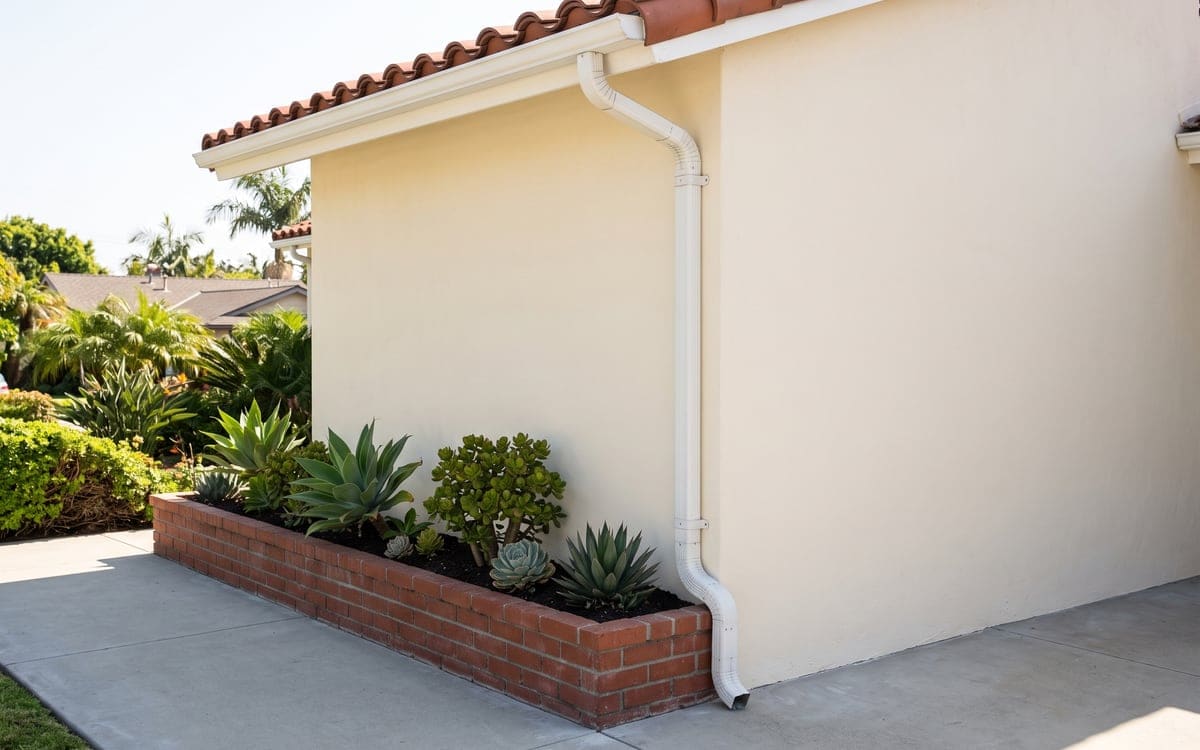
Power washing is another name people use
Power washing and pressure washing mean nearly the same thing to most homeowners, and the words get swapped around on the first call. If anything separates them in the trade, it is heat: a power washer uses hot water, where a pressure washer uses cold or ambient. Call for a power wash or a pressure wash and we will know what you mean. A longer guide on power versus pressure is on the list and will post on its own.
What a home pressure washer can and cannot do
The dial on a home machine changes the pressure, but a soft wash is a different setup rather than a lower setting. Setting the dial down does not reach the surface the way a real soft wash does. Pressure from any machine, home or professional, can hurt skin at close range, so a crew keeps the stream on the surface and away from hands, feet and anyone standing near the work. If a soft wash on the walls is what you want, calling a crew is the simpler route than reconfiguring a home machine.
Older Los Angeles houses lean toward the gentle side
The median home in the City of Los Angeles was built in 1965,1 and about 44 percent of the city's housing units were built before 1960, and about 19 percent before 1940.2 On a house that old, the paint, the stucco finish and the trim are all older too, and all three ask for a lighter hand.
The style of the house tells you a lot about the method on the walls. SurveyLA describes LA's Craftsman houses by their wide overhanging eaves, low-pitched roofs, exposed rafter tails and front porches, mostly in the city's earliest-built neighborhoods.3 Painted wood and the exposed wood under those eaves land on the low-pressure side. SurveyLA dates LA's Spanish Colonial Revival period to 1915 through 1942 and calls the style prevalent in single- and multi-family neighborhoods.3 On either style, a careful soft wash is the method on the walls.
What a crew looks at before choosing
Picking the method is a plain walk around the house. The crew looks at each surface in order, calls out the method it wants, and makes a note where the method changes. The walls, the trim, the eaves and the gable ends all take the soft wash. The drive, the walks and the patio concrete take the pressure method. The deck takes a soft to moderate wash. The roof, if it is on the list, is its own low-pressure pass from the ground.
| Surface | Method | Why |
|---|---|---|
| Smooth stucco | Soft wash | Dense but full of tiny pockets; tight streams chew the finish |
| Sand-finish stucco | Soft wash | Grit on the surface wants a careful, low-pressure rinse |
| Painted wood siding | Soft wash | Older paint can lift under pressure held in one place |
| Clay tile roof | Soft wash from the ground | Tile is washed in place, with no one on the roof |
| Shingle roof | Soft wash from the ground | Shingles do not want high pressure |
| Brick | In between, backing toward the middle of the dial with care at the mortar | A tight stream on one joint can erode the mortar |
| Bare concrete drive | Pressure wash | Hard, dense, and the stains sit in the surface |
| Concrete pavers | Pressure wash, with care at the joints | Takes more pressure but wants a steady pass |
| Wood deck | Soft to moderate | Reaches to clean, not strip |
The walk also sets the order of the day. Walls first, the roof as its own pass if it is on the list, the concrete after the walls so the drive finishes clean.
Where the method lands for your walls matters more than which word is on the quote. Siding, roof and drive each have their own answer, and the price follows the method. What goes into a price covers the number side of this, and the City's water rules cover where the water goes on any job.